Enterprise Design System
One System. Every Product.
The Opportunity
Before the design system existed, each product had, through the years, developed its own visual language. Design inconsistencies accumulated across the portfolio, and front-end engineers spent considerable time on work that a shared system could eliminate. I championed the build of an enterprise-wide design system that unified fragmented product surfaces into a cohesive, multi-platform ecosystem, giving every team a single source of truth for how Learning A-Z looked, felt, and functioned.

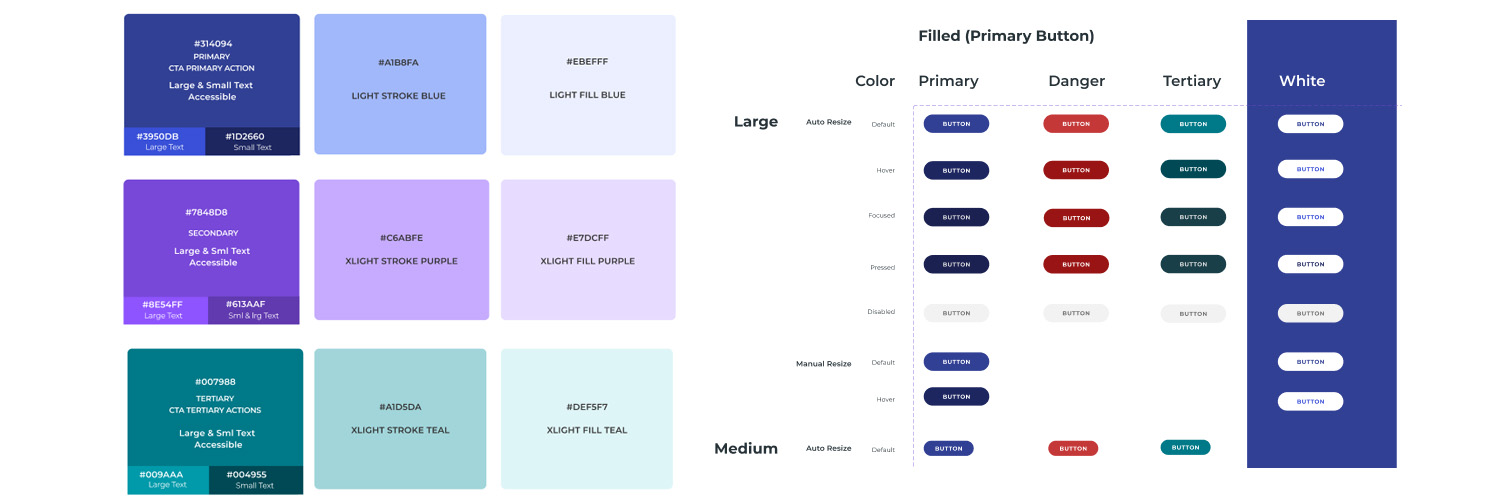
The system was built around an atomic design philosophy, where foundational elements combine into reusable patterns that teams across the portfolio could draw from rather than rebuild. At its core were several interconnected pieces:
- Component and pattern libraries: A shared library of building blocks, from individual UI elements to full page patterns, with a common language ensuring designers and developers were always on the same page (so to speak).
- Accessibility standards: WCAG 2.1 AA compliance baked right in.
- Internationalization guidelines: Components designed to handle translation and text expansion across a portfolio serving students in eight languages.
- Design philosophy: Three core principles — Easy, Engaging, and People-Centric — gave every team a shared framework for making decisions, ensuring consistency in how products looked and behaved.

Why It Mattered
The results were immediately apparent. Front-end engineering time on new features dropped by more than 50% when components no longer had to be built from scratch with each release (or prototype). Design velocity also increased, with teams able to assemble new experiences from a shared library rather than starting from a blank page. The lasting outcome was a portfolio that felt as though it came from the same company, regardless of which product a teacher using.